
Japan is getting quieter, not with silence but with the soft hum of televisions left on for company and kettles boiling for one. This is a nation where the trains still run like clockwork and the food still borders on the divine, yet behind the neon order lies a demographic reality that reads like a slow moving fever dream. The country is aging faster than anywhere else on Earth, and loneliness has become an invisible epidemic sitting beside perfectly arranged meals.
According to Japan’s Ministry of Health Labour and Welfare more than twenty nine percent of the population is now over the age of sixty five. The World Bank backs it up with numbers that land heavy on the table. Japan has the highest proportion of elderly people globally, and that figure continues to climb as birth rates sink and life expectancy stretches past eighty four years. Longevity here is a triumph of public health and diet, but it comes with a cost no one printed on the celebratory banners.
Elderly care homes are no longer just places for medical support. They have become emotional triage centers. Caregivers speak of residents who eat less not because food is scarce but because appetite fades when conversation disappears. The National Institute of Population and Social Security Research warns that by 2040 nearly four in ten households will be occupied by a single person, many of them elderly. Isolation is no longer a side effect. It is the main condition.
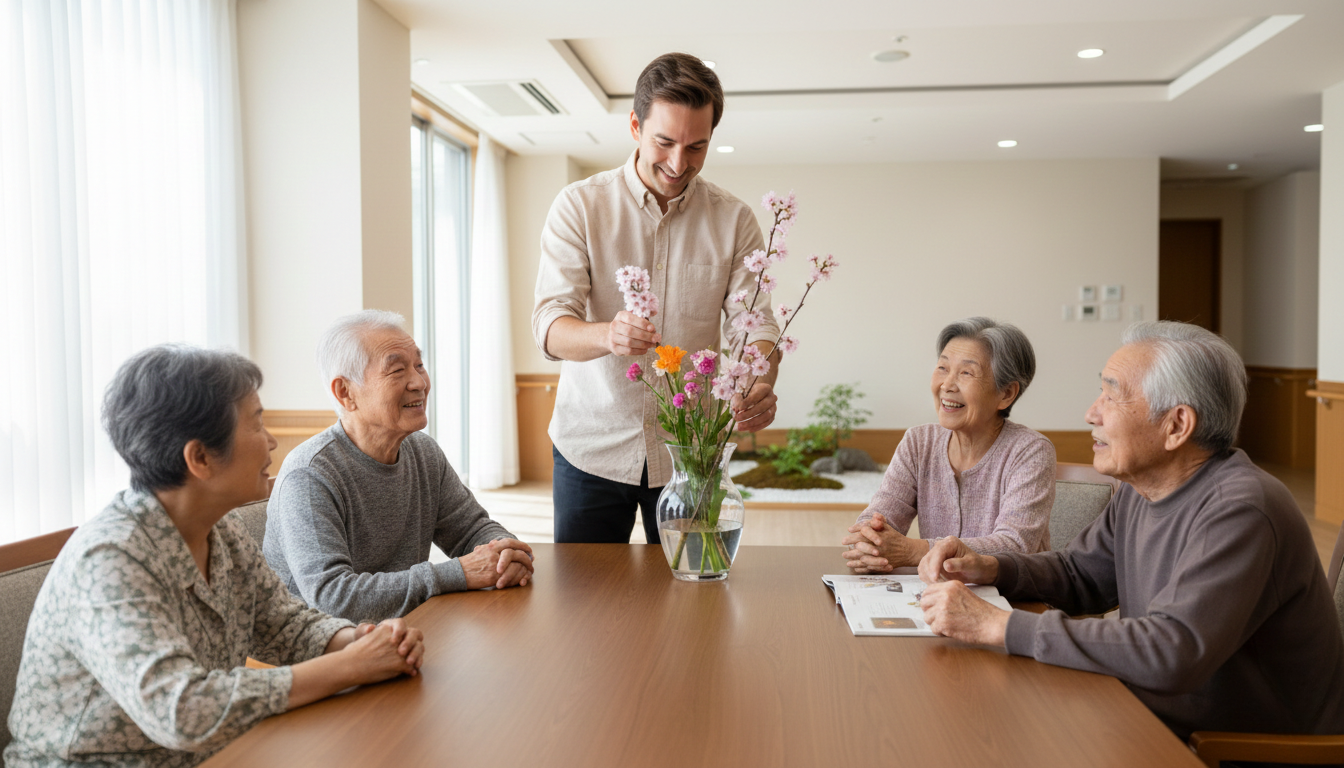
This is where companionship programs step in like an unexpected dish at the end of a long meal. Donations to elderly care homes fund shared meals storytelling circles music afternoons and simple human rituals that remind people they are still seen. According to the Cabinet Office of Japan social isolation has been directly linked to declining physical health cognitive deterioration and higher mortality among older adults. Companionship is not charity fluff. It is preventative care.
The latest issue tightening the vise is workforce strain. Japan simply does not have enough caregivers. Reuters reports that the country faces a shortfall of hundreds of thousands of elder care workers by the end of this decade. That means even the most dedicated staff are stretched thin running on schedules that leave little time for conversation or presence. Donations help bridge that gap by funding volunteers training programs and community partnerships that bring people back into the room.
There is also a cultural shift underway. Younger generations are more mobile less tied to hometowns and more financially strained. The old multigenerational household has become an artifact. According to the OECD the number of elderly living alone in Japan has more than doubled over the past three decades. The social contract quietly rewrote itself while no one was looking.
Solutions exist and they are refreshingly human. Companionship programs work best when they connect care homes to local schools cafes artists and neighborhood groups. Intergenerational exchanges where students visit elders to cook talk or simply listen have shown measurable improvements in mental health according to studies cited by the Japanese Society of Gerontology. Technology also plays a role but only when it supports connection rather than replacing it. Tablets used for video calls community radio programs and shared digital storytelling projects help keep minds engaged and spirits upright.
Policy support matters too. Experts from the Ministry of Health advocate expanding community based integrated care systems that allow elderly people to remain socially connected even within care facilities. Donations amplify these systems by funding the small details government budgets often miss. Transport for outings supplies for group activities and staff time dedicated solely to companionship.
If Bourdain had wandered into one of these care homes he would have noticed the food first. Impeccable rice perfectly grilled fish miso done right. Then he would have noticed what was missing. The noise. The laughter. The argument over who makes the best pickles. Thompson would have called it what it is. A country winning the battle against death but struggling with what comes after.
Donating to companionship programs in Japanese elderly care homes is not about sentimentality. It is about restoring balance in a society that mastered efficiency but now needs intimacy. It is about making sure long lives are not spent in quiet rooms waiting for time to pass. In a nation built on precision and care this is the next essential craft. Showing up for one another before the silence gets too comfortable.
Written By: Marc Ford, Travel Guide
Travel Visas & PassportsTravel Insurance